Wednesday, November 10, 2021

Tuesday, November 2, 2021
Joint Tenants vs Tenants in Common

There are 2 Alternative ways to own Property in Australia: Joint Tenants vs Tenants in Common
In a Joint Tenancy, all of the owners own the entire property. If one of them dies, the survivor(s) remain the owner of the property – it does not matter what any Will might say until there is only 1 registered owner.
In a Tenancy in Common, each owner has a defined share – 50%, 30%, etc. If an owner dies then their share in the property passes accordingly to the terms of their Will, or if they do not have a Will, according to the rules about intestacy. (Joint Tenants v Tenants in Common)
If you don’t know what your ownership details are, we can do a Title Search and find out for you. It is possible to change from one type of ownership arrangement to the other, although there could be some stamp duty to be paid depending on your individual circumstances.
You will need to make your own arrangements for connecting electricity, gas, telephone, internet, pay-TV services, and other utility services from the proposed settlement Steps date. If a service provider will not arrange for connection from the settlement without authority or confirmation from the Seller please obtain this via the real estate law agent or from the Seller directly. It is beyond the scope of our retainer.
Additionally, the Family Law Act allows the Courts to alter the arrangements completely in the event of a Property Settlement Dispute, and the details of the ownership arrangement are separate from your responsibility to pay any mortgage payments.
Article Source: Property Lawyers Brisbane
Friday, October 29, 2021
What Should You Consider Before Buying Property?

Searches and Seller’s Disclosure
Generally, the property is sold free from encumbrances except those disclosed in the Contract. In addition, there are certain statutory warranties that apply and the Seller may make certain warranties in the Contract regarding the Property’s condition.
We will need to undertake various searches immediately following the establishment of the scheme and registration of the plan creating the lot to establish whether the Seller has complied with its disclosure obligations and that the warranties are correct. In the event of any adverse results, we will advise what rights you have in relation to those matters. Unless you instruct us otherwise, we will undertake all necessary searches immediately following receipt of notice of registration, so that we can protect your interests.
Despite undertaking certain inquiries which may reveal adverse impacts on the Property, you will not always be able to terminate. If searches do reveal unsatisfactory results we suggest you instruct us to give you specific advice about your contractual rights and any remedies you may have. The advice will depend on the nature of the unsatisfactory search result and your particular Contract. For example, the discovery of unapproved structures, non-compliant swimming pool fencing, and flooding do not give you a right of termination or a right of compensation from the Seller. Despite this, searches are still undertaken so that you are well informed of the Property’s condition.
Present Use
For residential units, the development will usually require approval for a material change of use.
Following construction, it is prudent to obtain a standard town planning certificate to confirm whether a material change of use approval was obtained and the terms of that approval. Our recommendation about a town planning certificate appears below.
Town Planning Certificates
There are three types of planning and development certificates that can be obtained from the local authority. The information these searches disclose and their relative cost is set out in the buyer’s Searches List:
- Limited Certificate – (Takes approximately 12 business days)
Provides:
- Information as to the town plan area or zone in which the Property is located; and
- By reference to the plan, a description of the planning scheme provisions applying to the Property.
Limited certificates do not tell you whether the existing use is lawful or whether any conditions for the use of the Property have been complied with. This certificate reveals the designated zone of the land and any other restrictions on the use of land in the zone (e.g. if the Property is in a Demolition Control Precinct or subject to character housing or other development codes of general application to the area).
- Standard Certificate – (Takes approximately 12 business days)
Provides:
- The same information as in a limited certificate; and
- A copy of every decision notice or negotiated decision notice for a development approval that has not lapsed, which has been issued by the local authority for the Property.
By looking at the existing use of the property, the local authority area or zone and the approvals obtained, it is possible to ascertain if the property is capable of being lawfully used for its existing use or for other uses.
The certificate does not identify compliance with any approval conditions.
- Full Certificate – (Takes approximately 30 business days)
Provides:
- The same information in a limited certificate and standard certificate; and
- If there is currently in force for the Property a development approval containing conditions (including conditions about the carrying out of works or the payment of money), a statement about each condition’s fulfillment or non-fulfillment.
The full certificate is more expensive because a town planning officer from the local authority needs to inspect the Property and go through approval conditions to identify compliance and non-compliance.
Recommendation on Town Planning Certificates
- For a residential dwelling or vacant land, a limited certificate will generally be adequate unless you intend to develop the property when you may require a standard or full certificate;
- For residential units, the overall development must have been granted approval for a material change of use. It is prudent to obtain a standard certificate to confirm approval was obtained.
Despite the above, we still recommend you instruct us to obtain a standard certificate otherwise you may not be able to establish that the use is lawful. In addition, information about some local government charges that may apply to the Property (such as infrastructure charges) is only available by obtaining a standard (or a full) certificate. Local government approval for a change in use or a reconfiguration will often include conditions requiring the payment of charges for infrastructure use or upgrade. If the seller does not pay any relevant charges attaching to the Property, you may become responsible for their payment.
We recommend, at the very least, that you instruct us to obtain a limited certificate.
It is important to note that any development approval for the Property attaches to it and will bind the owner (and any occupier) of the Property. If you purchase the Property and there are outstanding obligations under a development approval, you may become liable to perform them and for any consequences of non-compliance (including prosecution for an offence).
The only sure way of knowing whether approval conditions have been complied with is to obtain a full certificate. Obtaining a full certificate is costly and takes considerable time (you may not necessarily receive the certificate by settlement even if ordered immediately). The certificate is legally binding on the council and the search may discover non-compliance issues that the other town planning certificates will not. If you intend to develop the Property or are particularly concerned with compliance with all approvals (and your settlement date is sufficiently far enough away to allow the results to be obtained in time) it can be beneficial. If you require a full certificate please contact us as soon as possible.
Future Use
If you have any plans to change the present use of the Property or any building structures on it in the future, it is your responsibility to investigate what approvals you require from the local or other authorities. This is not part of our retainer.
Environmental Protection
The Environmental Protection Act 1994 (Qld) (“EPA”) requires that the Seller makes specific disclosure, before entering into the Contract, if any of the following are applicable to the land (including the common property if in a Community Titles Scheme):
- The land is listed on the Contaminated Land Register or Environmental Management Register;
- The land is the subject of an EPA notice or evaluation (generally about possible contamination or notifiable activities such as underground fuel storage); or
- A magistrate has issued an EPA order for an authorised person to enter the land to conduct an investigation or carry out work.
If any of these apply and the Seller does not give disclosure before you enter the Contract then, you may terminate before the earlier of settlement or possession. If the Seller has not complied with these disclosure obligations, the Seller may still give disclosure after the Contract has been entered into, but you will be given a period of 21 business days after disclosure to terminate the Contract. If you do not terminate in that time you will lose the right. Given the limited time period available for termination, it is important that you contact us promptly if you receive a notice from the Seller to remedy a failure to comply with its disclosure obligations.
If you terminate the Contract because of the Seller’s failure to make relevant disclosure, all money paid by you under the Contract must be refunded.
The searches we undertake only identify land on the Contaminated Land Register or the Environmental Management Register but not notices and orders. If you think the land may be contaminated, consider the prior or current use of the land might contribute to any contamination issues or any notices or orders that may affect the land, please contact us as soon as possible so that we can take the necessary steps.
Administrative Advice
Administrative advice may reveal interests on title impacting on the land that require disclosure by the Seller such as heritage listing or agreements, coastal protection notices, nature conservation orders, vegetation clearing offences, or Milton Brewery notices (for a lot in respect of a unit).
Administrative advice on title may note that the land is declared acquisition land under the Queensland Reconstruction Authority Act 2011 (Qld) and the following would apply:
- The owner is not able to sell the land other than to the authority; and
- If the owner does want to sell the land the authority must acquire it.
If coastal protection or tidal works notice is given under the Coastal Protection and Management Act 1995 (Qld), this should appear as administrative advice. If you buy land with this on the title, then the Contract may be of no effect unless the Seller has given you written advice of the undischarged notice not less than 14 days before settlement, or if settlement is less than 14 days after the Contract Date, at or before entering the Contract.
Your rights for any administrative advice, including termination rights, may depend on the administrative advice and the extent of disclosure.
Physical Limitations, Government Intervention and Operational Issues Affecting the Land
Unless you specifically instruct us to do so or unless the information is provided in the results from our standard searches, our retainer does not include advice about any of the following issues:
- Whether the land is subject to laws about acid sulfate soils;
- Whether there are agricultural land protection laws affecting the site or nearby land, air pollution;
- Animal conservation laws over the site including current or proposed future wildlife corridors;
- Bushfire control laws;
- Whether the site is subject to commonwealth government environmental laws;
- Laws about a potential acquisition of part or all of the site by government or quasi-government entities;
- Whether the site or nearby land is contaminated or potentially contaminated;
- The ability for the site to treat effluent;
- Impacts on the site from current or future extractive resource developments including existing or possible future road haul routes;
- Flooding from storm surge, overland flow, or other sources;
- Foul water drainage, stormwater drainage pipes, sewerage pipes whether existing or proposed;
- Whether you have any rights in negligence or contract or any other basis against an approving or acquiring authority;
- Service connections to the site by services such as sewerage, water, power, telephone, internet or gas;
- Whether the site is subject to land slip-on or steep slopes;
- Any laws relating to waste management and the use of the site for waste management activities;
- The availability of waste collection services for the site; or
- Watercourses and underground water sources on the site and their effect on the usability of the site.
If you have any particular concerns relating to any of these matters then you should contact us.
Unregistered Encumbrances
Unregistered encumbrances and other government rights or interests may affect the Property or the title such as:
- Unregistered water, sewerage or combine drains; or
- Access or extraction rights under the Greenhouse Gas Storage Act 2009 (Qld); Geothermal Energy Act 2010 (Qld) or the Petroleum and Gas (Production and Safety) Act 2004 (Qld).
The standard searches may not reveal all unregistered encumbrances or other rights or interests. Council rates searches often show sewerage or drainage lines through the Property.
If you have any concerns about unregistered encumbrances, please contact us as soon as possible.
State Government – Prescribed Projects
It is possible that infrastructure projects undertaken by the State Government under the State Development and Public Works Organisation Act 1971 (Qld) may affect the land or nearby properties (e.g. water infrastructure pipeline works).
Your use and enjoyment of the land may be affected by a project even though the land is not directly affected. Our searches only reveal issues affecting your land.
We suggest you check to see if projects have been declared or proposed in the area.
Urban Encroachment
The Sustainable Planning Act 2009 (Qld) (“SPA”) contains provisions for the registration of urban encroachment areas that are known to be affected by the emission of aerosols, fumes, light, noise, odour, particles, or smoke.
If the Property is in an affected area, then you are restricted from taking proceedings against the industry making the emissions, with few exceptions.
There is generally no termination right if it is discovered that the Property is in an affected area. However, contracts for units in the Milton Rail Precinct that are subject to a current development application made before 27 April 2009 may be terminated if you did not receive a notice before the Contract.
An owner must not lease a unit in an urban encroachment area before giving notice to any tenant that the unit is in the area and noting the restriction on proceedings.
- Neighborhood Disputes
Please tell us if you hear about or receive any copies of documents relating to disputes between the Seller and neighboring property owners about dividing fences or trees. In particular, please tell us if you are aware of any:
- Notices to fence from a neighbor;
- Applications to QCAT for fencing or trees; or
- QCAT orders for fencing or trees affecting the Property.
If there are three applications or orders affecting the Property and you receive them from the Seller before you enter into the Contract, then you can be obliged to respond to the QCAT application or complete work specified in an order which has not been completed.
If copies of three applications or orders are not given to you prior to your entry in the Contract then you may have the ability to terminate at any time prior to settlement. The Seller may also be liable for your reasonable legal and other expenses incurred in relation to the Contract after you signed it.
If you complete the purchase and the Seller has not completed all work required in a QCAT tree order not disclosed to you before the contract, the Seller will remain liable to carry out the work after settlement.
Building Covenants
Are you aware of any building covenants affecting the Property or have you signed any document relating to any covenants? If so, please provide us with details and a copy of any documents signed, as these may impact your proposed use of the Buying a Property or bind you to additional contractual obligations or liabilities.
Article Source: Property Law
Thursday, October 28, 2021
Federal Court Imposes A Pecuniary Penalty Of $20 Million For False Or Misleading Representations

This article aims to analyze the recent decision of the Federal Court imposing a pecuniary penalty of $20 million for false or misleading representations on the Colonial First State Investments Limited (Colonial).
Summary Of Facts
The cited case is Australian Securities and Investments Commission v Colonial First State Investments Limited [2021] FCA 1268. Colonial in this case admitted that between 2014 and 2016 it designed and implemented a communications campaign, via letters and telephone calls with nearly 13,000 of the members of its FirstChoice Personal Super product, in which it made false or misleading representations about members’ entitlements in relation to their superannuation investments.
The Court noted that Colonial’s conduct in sending 12,911 letters on or about 22 April 2014 to members of its FirstChoice Personal Super product from whom Colonial did not hold an investment direction (as defined) and who had accepted superannuation contribution into Colonial’s FirstChoice Personal Super product in contravention of s 29WA of the Superannuation Industry (Supervision) Act 1993 (Cth) (SIS Act) (the Letters) and further, by making 70 telephone calls between 18 March 2014 and 21 July 2016 to members of its FirstChoice Personal Super product who were in the same position as the recipients of the Letters (the Calls), as part of a program of calls to at least 12,209 members.
What Was Considered To Be False Or Misleading Representations?
The Court viewed that in the Calls and Letters, Colonial did not disclose to its members that it was in breach of s29WA and further misrepresented to members the nature of the obligation under that provision. It also misled its members in a manner designed to maximize the prospects of the members providing Colonial with an investment direction. Obtaining an investment direction was in Colonial’s commercial interests because those members would continue to pay higher fees associated with the FirstChoice Personal Super product rather than the lower fees payable under no-frills, low-cost MySuper product.
Why Was The Penalty Not Higher Than $20 Million?
Justice Murphy in handing down the decision opined that he has taken into account that Colonial has embarked on a substantial remediation program, and the penalty would have been higher had it not done so. His Honour further stated that Colonial, in respect of telephone calls made to its members of FirstChoice Personal Supper (not just the 70 Calls which are the subject of the Declarations) it has paid a total of $77,079,209 to date in relation to 7,695 members accounts, doing so on the assumption that, in each case, the members would not have provided Colonial with an investment direction had the call not occurred. The Court also took note of the fact that, in respect of the contravening Letters, Colonial has committed to remediating all affected customers that have not already been compensated, which is likely to amount to approximately a further $45 to $53 million, in relation to losses arising from conduct within the scope of this proceeding.
What Other Measures Did The Court Deem Appropriate?
Justice Murphy further opinioned that in his view it is appropriate to make an adverse publicity order which will provide a notice advising of the contraventions to appear 90 days on the home page of Colonial’s website, and for one year on the webpage which appears after a member or employer logs into Colonial’s secure online service via the ‘member’ or ‘employer’ sections of the webpage using personal credentials; Colonial is also to mail the notice to members of its FirstChoice Personal Super product in the relevant period.
Why A Pecuniary Penalty After All?
The Court is of the view that the principal object of a pecuniary penalty is deterrence, directed both to discouraging repetition of the contravening conduct by the contravener which is commonly known as specific deterrence and discouraging others who might be tempted to engage in similar conduct which is commonly known as general deterrence.
👉👉 For advice or assistance with all consumer matters and the latest update contact the Consumer Law Team at Aylward Game Solicitors today on 1800 217 217
Source: False Or Misleading Representations
Monday, October 18, 2021
Divorce Asset Split In Australia: Who Gets What In A Property Settlement?

It is essential for you to decide about property settlement if you are thinking to end your relationship. It is good to know how assets split in Australia works. Our article will inform you about the process and rules for property settlement in Australia. Also, you will find tips for getting better results. We also have some examples that can explain to you the working process of the divorce settlement.
You cannot predict the exact outcome of your process, but you can take some steps to get the necessary help.
- Get in contact with the best real estate agents in your town.
- Get help from experts in a divorce settlement.
What is a property settlement?
If you are getting a divorce, then property settlement will decide how to divide your assets and liabilities. It contains both shared and individual properties.
You can solve this issue without the involvement of Lawyers or the Family Court of Australia, by making an agreement with your partner. It is important to make the agreement formalize with the court to make it legally binding.
The aim of a divorce settlement is to divide assets between couples in a way that they don’t need each other for financial support. This process counts all the properties or financial responsibilities that were involved during the marriage.
Property settlement after a divorce time limit
It is good to resolve this issue as soon as possible if you are having a divorce or getting separated. This involves all the property purchased during marriage or after separation. After divorce, you have a year to apply for divorce property settlement, and after the breakdown of a de facto relationship, you will have 2 years. If unfortunately, you cannot apply during the time, you can apply to the Family Court of Australia for special permission.
The property settlement agreement:
It is a legal agreement between divorced or separated individuals. It contains the arrangements for property settlement after divorce or separation.
There are two approaches for reaching a property settlement agreement:
- Both individuals can decide the matter of property division, and then they will formalize their agreement through the court.
- You can Family Court of Australia to decide on dividing the assets.
If you can decide without the help of the court, you will save some bucks and time. But it may not be possible in your situation. You may need a lawyer to get some legal advice and a voice for you in court.
The divorce law Australia for property settlement is the same all around Australia, it doesn’t matter in which state you live. Also, it is not mandatory to complete the divorce before dividing the assets. You should go to the settlement as soon as possible.
How much time does the settlement take?
It depends on how you proceed. It will be much faster if you can decide with your former partner. But if it is not possible, then you should go to court. You may have to wait for months or even years to get the result from the court.
Guidelines for dividing assets:
Here is a procedure that you can use in both conditions.
- List of all assets and liabilities: Provide a list that contains all of your assets with their values. Both parties submit their own files. We know it as a “pool of assets”. The list includes all individual and shared properties.
- Future financial needs: Make an estimate of the future financial needs of each person, to get a fair guess we include the person’s earning capacity, child support, health, age, and financial resources.
- Proposed agreement: Create a proposed agreement that shows who gets what.
- Assess: Check if the agreement is fair or not. If you are happy with the agreement, then go to court to formalize it, else apply to the court to have a just decision.
If the court is going to decide, then it will also follow a similar pattern. The court will see all of your assets and will also consider the future needs of a person. The court will try its best to give a fair and just decision.

Can I sell the property after divorce?
It is not wise to sell any property before dividing assets. Because everything you own will be a part of the pool of assets. You will need to add it for sorting an agreement for the property. But you can sell it if the other partner agrees.
Tips for dividing assets:
In a divorce settlement, you wish for better results. Remember the following dos and don’ts when going through this problem:
The dos:
- Keep a record of all assets or debts.
- If you want to sell property, inform your informal partner.
- You should get legal advice for both selling and settlement of assets.
- Try to use alternatives of the court as it saves time and money. You have two options other than the court
- Mediation: In mediation a neutral professional guides the process of settlement. If you can make an agreement through mediation, then the court formalizes it.
- Arbitration: It is just like a court, but it is not formal. If both parties decide an agreement there, they register an arbitral award in the court and becomes binding for both individuals.
The don’ts:
- Do not wait until the divorce is final for property settlement.
- Do not hide any assets or property.
Property settlement examples:
Johnny and perry had a divorce in Australia, their asset pool was:
- A marital home worth 1,200,000 dollars and its mortgage was $700,000, so the total becomes $2,000,000.
- They also had a car worth 25,000 dollars.
- Perry’s superannuation worth $15,000.
- Johnny’s superannuation worth $25,000.
They can make an agreement or the court can decide that Perry gets 60% and Johnny gets 40%. According to their future requirements and financial resources. This is a 60/40 split divorce.
Perry can keep the car, and they both keep superannuation. Johnny will keep the house and will pay Perry so she can buy a place.
Frequently asked questions:
Let’s have a look at the most commonly asked questions for property settlement.
How to work out divorce settlements?
The first step to take for divorce settlements is to get legal help. It is better to make an agreement by discussing with your former partner as it will save you time and a few bucks.
Does a wife have more benefits?
The wife can get half of the assets. In the case of child support, she can even get an amount from the income of her husband.
Article Source: divorce and property settlement
Tuesday, October 12, 2021
How To Stay Safe From Property Fraud?

Particular issues of property fraud concern
If there are matters regarding the Property of particular concern or importance to you or your financier then you should contact us so that we can determine whether a special condition is required and appropriate investigations can be made. For example:
- Is the purchase subject to the sale of the Buyer’s existing property?
- Is payment of deposit by insurance bond or bank guarantee?
- Rights of termination if particular searches are adverse for example if an existing or proposed tunnel or abandoned mines are discovered beneath the Property.
Fraud, Identity Theft, and Hacking
There has been a recent increase in the number of attempted property fraud relating to real estate.
It is essential to the conveyancing process that you provide us with a range of private information. Much of that information can be obtained by fraudsters and identity thieves from publicly available records or by hacking, phishing, or trolling through unsecured email transmissions.
Parties to a conveyance are targeted as the conveyancing process often requires the transfer of large quantities of money.
We will take steps, such as obtaining personal identification from you, to assist to minimise the risk of property fraud.
We recommend that you also take steps to minimise the risk that your personal information is fraudulently obtained by being cautious about all communication. This could include the following steps:
- Double-check that all money transfer requests are legitimately requested by our law practice or your financier – despite how legitimate the request may appear;
- Do not transfer any money to any account other than our trust account (at our request – details of which are in the To-Do List) or to your existing financier or mortgage accounts (at your financier’s request) – without first checking with us that the transfer is necessary for your transaction;
- If you are contacted by someone you don’t immediately personally recognise representing themselves to be from our law practice, your financier, or somehow linked to the transaction, ask the representative some historical questions about the transaction that you can be certain will verify that they are who they say they are;
- Avoid sending personal and sensitive information such as bank account numbers via email;
- Where instructions are requested or advice is provided via email, check with another form of communication.
Promises Made By the Seller or the Agent
Please tell us of any promises or warranties made to you by the Seller or the agent which are not contained in the Contract as soon as possible, as we may not be aware of them. There may be no protection for you in the Contract in relation to such issues. Your options may be limited to:
- terminating under any applicable cooling-off period or some other contractual term (where applicable); or
- a claim for compensation.
Court action is expensive and if you are aggrieved by the misrepresentation it may be more cost-effective to terminate, if possible using any contractual rights if you have the opportunity.
Other Professionals
We suggest you seek advice about the purchase from other professionals, including:
- an accountant – about the commercial viability, appropriate purchasing entity, tax considerations of the purchase, and (if applicable) compliance with your SMSF’s investment strategy;
- a valuer – to assure yourself that the price represents the market value of the Property; and
- a town planner – to assess planning compliance issues or give advice regarding proposed future development.
If the proposed lot includes vacant land, you might also consider seeking advice from:
1.a surveyor – to survey the property to check for a boundary, area, and encroachment issues;
2.a soil tester – if you are planning on building (particularly in a new estate) to assure yourself that the soil condition does not require any special construction requirements.
Article Source: How To Stay Safe From Property Fraud?
Wednesday, October 6, 2021
Where Family Law and Estates Intersect

Introduction
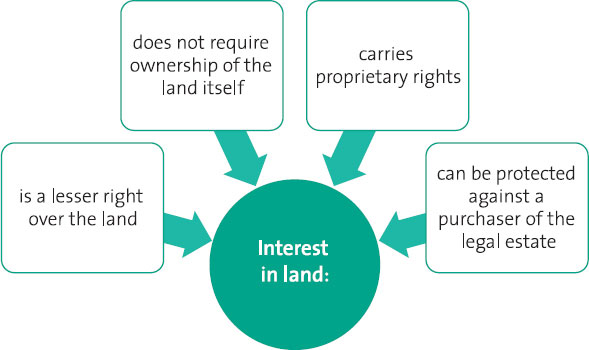
In addition to the two legal estates inland, it is also possible to have an interest inland. This is a lesser right over the land which falls short of possession.
Anyone can own an interest in land.
It is not always necessary to own land to have an interest inland. For example, à privilege, or ‘profit a prendre’, allows the owner of that interest to enter a person’s land in order to take produce from it, such as crops or firewood, without actually being the owner of any land themselves.
Aim Higher
There are exceptions to this rule, as easement can only benefit an individual as the owner of the benefited land. This is discussed in further detail in Chapter 9.
As a property right, an interest in land can be sold by the owner of the interest or transferred to a third party in the same way as an estate in land can. The owner of an interest in land can also protect their interest against a third-party purchaser of the estate in which the interest is held.
Legal and equitable interests in land
Interests in land can be legal or equitable.
Legal interests
According to s 1(2) of the Law of Property Act 1925, there are five legal interests that can exist over land. These are:
- an easement, right or privilege;
- a rent charge;
- a charge by way of a legal mortgage;
- miscellaneous statutory charges;
- rights of entry.
Family Law and Estates Intersect
The recent Canadian case of Carrigan v Carrigan’s Estate is a timely reminder of the need to ensure that we all keep our financial affairs in order, particularly when there have been changes in our family circumstances.
In this Canadian case, Mr. Carrigan passed away leaving a DeFacto partner with whom he had been living at the time of his death but also a wife from whom he had not been divorced. In that situation, the Canadian Courts were called upon to decide who should receive which elements of Mr. Carrigan’s Estate.
Whilst that decision was based on the relevant legislation in Canada, it is a timely reminder to all of us to keep our Life Insurance and Superannuation benefit nominations under review, as well as our Wills, and to amend them if family circumstances change. For advice in relation to Family Law and estates Matters or in relation to the preparation of Wills contact Ian Field on  07 3236 0001 or ifield@aylwardgame.com.au.
Article Source : Where Family Law and Estates Intersect
Domestic and Family Violence and Wills and Enduring Powers of Attorney and Superannuation Nominations

The definition of domestic and family violence is widely drawn in Queensland, and an increasing amount of attention is being paid to what is described as coercive control. It would not be uncommon for 2 people who are married or in a de facto relationship to write wills or EPOA’s appointing each other as attorneys and executors. These appointments do not change unless you take steps to implement changes. Therefore if your wishes change, you need to act to give effect to your new intentions and wishes.
If you are making plans to leave a relationship, changing your will or your enduring power of attorney is a step that you can consider taking as part of your preparation. If you have already left your relationship, this is something not to forget to attend to. In most situations it should be straightforward and it will not be necessary to notify your former partner, but it would be preferable to take legal advice as there may be situations in which this may not be so straightforward. Your enduring power of attorney qld allows you to appoint someone you trust to make decisions for you during your lifetime.
Another consideration is your Super fund, and whether you have made a Binding Nomination to your Super fund. If you are in a de facto relationship that ends then an entitlement to receive a payment on death will cease when the relationship ceases, but for people who are married the entitlement only ceases on divorce, so again make sure you consider this. Also don’t overlook that Super Fund nominations usually need to be renewed every 3 years, or they will lapse.
For Family Law Advice with a practical focus or need an Enduring Power of Attorney QLD, Call Aylward Game Solicitors on 1800 217 217
Learn more here: Family Lawyer Brisbane & Estate Lawyers QLD
Friday, September 24, 2021
Husbands Should Be Nice To Their Mother-In-Law?

If the Comedians are to be believed, the chances of a husband getting on well with his mother-in-law are nearly zero.
But if the psychologists are to be believed, he really should try.
According to researchers in the USA at the University of Michigan Institute for Social Research, Husbands who get on well with their in-laws have a 20% higher chance of avoiding divorce than the average.
In contrast to the Husbands, the research found that women who enjoy a good relationship with their in-laws have a 20% greater chance of separating.
The researchers suggested that wives who like their in-laws may find it hard to set boundaries at the start and in the following years they may feel the in-laws are meddling.
The study found that husbands who made the effort to get on with their mother-in-law were the ones most likely to stay married. These studies were based on couples between the age of 25-37 and in their first year of marriage when the study began in 1986. The researchers have followed the progress of this group ever since.
According to the lead researcher Dr. Terri Orbuch, wives should be careful about sharing details of their marriages, so that everyone respects each other’s boundaries, and husbands should make sure they treat their in-laws as “special and important”.
We don’t know if the same findings would arise in Australia, but if you find that you need some legal advice about family law matters, please speak to our partner Ian Field.
Article Source: Family Law
Monday, September 20, 2021
How Much Does It Cost To Get A Divorce in Australia?

The million-dollar question How much does it cost to get a divorce in Australia is determined by about a million factors, but mainly depends on the actions of you and your partner.
We can however advise of your family law costs in relation to a property settlement, custody, and time spent with children in stages. These could be stages such as how much to get to know your rights and entitlements, how much to make an offer or how much to prepare for Court.
How Much Does It Cost To Get A Divorce in Australia?
We can also advise clients of what their costs would be if the matter is ‘straight forward’. This means minimal if any negotiation of how matters are to be finalised whether it be in regard to assets and liabilities or care of children. The one major factor that will definitely increase your family law costs is not being able to communicate with your partner.
Of course, it is always advisable to find out what your rights and entitlements are before agreeing on a settlement and we are able to give you a fixed fee for this work. Armed with this information you are then able to negotiate and hopefully agree on how your issues will be dealt with and once again we can advise of costs for implementing the agreement reached.
For some people, this is just too difficult and that is why there are other avenues available for couples to seek assistance and guidance on how to come to an agreement and settle matters.
These are outlined on our Family Law website:
Family Law has developed packages to enable us to minimise client’s legal costs.
We work with our clients to, in many cases, “help them help themselves” and save on legal costs.
We have available our online advice for $275, our client instructions pack $1,650, and our fixed fee policy detailing further options. To find out more about how we can help you please contact our office at 3255 3200 and take the opportunity of our 20-minute free consultation to talk with one of our lawyers.
Article source: divorce in australia
Friday, September 17, 2021
Altruistic Surrogacy in Queensland

Since July 2010 Altruistic Surrogacy has been a possibility in Queensland. Whilst the Surrogacy Act allows Altruistic Surrogacy, a Commercial Surrogacy arrangement remains illegal in Queensland. It is also illegal for a Queensland resident to enter a Commercial Surrogacy arrangement even if they do so outside of Queensland.
This point was highlighted in 2011 when a Family Court judge referred more than one case to the Director of Public Prosecutions in Queensland because Queensland residents had entered into commercial surrogacy arrangements outside of Australia. This underlines the importance of ensuring that if you wish to enter into an Altruistic Surrogacy arrangement that you ensure that you comply with all of the requirements of the legislation. If you do not properly comply with these requirements it is possible that the Court may not grant the Parentage Orders, and you may also face Prosecution. The Surrogacy Act requires both the birth parents and the intending parents to strictly comply with a number of procedural requirements which include obtaining specific legal advice and counselling at certain stages in the process.
If you are contemplating and Surrogacy Arrangement as either a birth parent or intending parent, it is important to know that you can rely on your Lawyer to ensure that the legal work is undertaken promptly and professionally.
Our partner Ian Field advised on one of the first Altruistic Surrogacy Arrangements and Applications to be made to Court for approval for Parentage Orders. The application was successful and the intending parents were granted the Parentage Orders that they sought.
Ian also believes that the Collaborative Law approach is ideally suited to the issue of Altruistic Surrogacy and together with Mr. Randal Binnie, another Family Lawyer in Brisbane he has created this. For legal advice regarding Altruistic Surrogacy Arrangements please contact our partner Mr. Ian Field on 07 3236 0001 or by email at ifield@aylwardgame.com.au
Article Source: Altruistic Surrogacy in Queensland
Thursday, September 16, 2021
A SUREFIRE METHOD HELPING FAMILIES STREAMLINE THE DIVORCE PROCESS

For the sake of your family and children put away your hatred and animosity and endeavour to talk to your former partner in a reasonable manner only if for a short period of time to reach a resolution that best suits your children, yourself and your former partner.
Do this with the assistance of people who have the professional experience to help you through this highly
emotional period of your life.
Ian Field has more than 40 years’ experience as a solicitor practising in Family Law and over 26 years of involvement in alternative dispute resolution. James has been instrumental in developing Collaborative Law in Brisbane. Collaborative practice is one of the best ways to resolve family and relationship issues. It offers an amicable, speedy and cost-effective way to reach an agreement.
Collaborative practice depends on two things; the skill of the collaborative lawyers and the general willingness of the parties to participate openly.
Collaborative practice will assist you to identify the issues you face, come up with realistic options that suit both you, your former partner and your children, solutions that will work.
Do this with the assistance of people who have the professional expertise to enable you to move on with
James has had extensive training in the mediation process and collaborative practice. He, with the assistance of a similarly trained specialist can assist you to reach the resolutions you are seeking.
How Can I Avoid Family Court?
James was trained in mediation with Marriage Guidance Queensland (now Relationships Australia).
He and the other professionals undertook training for an extensive 8 months period and conducted mediations with similarly trained professionals.
Did you know that the training mediator’s received at Marriage Guidance Queensland was at the forefront of what is now Collaborative Practice?
The mediation involved two professionals, a solicitor and either a Social Worker or a Psychologist. Both were trained in the collaborative process. The male/female combination matched the male/female relationship of the parties who had the advantage of this mediation experience.
Both Mediators were attentive to the needs and wishes of the parties.
The parties were encouraged to express their needs and wishes and to explain to the other party why such needs and wishes were important to them. Importantly, parties were encouraged to listen and appreciate why such needs and wishes were so important.
No outside lawyers were involved. No court fees, no detailed preparation of affidavits and court documents.
The parties were able to reach their own agreements and resolutions in an amicable and cost-effective way.
The resolutions reached were detailed in an agreement and if the parties so wished the agreement was formalised in the family court. No attendance at Court was required.
Is this process still available to me?
YES – Collaborative mediation by James with similarly trained female professionals is readily available to you. It is a voluntary process only you, your former partner and the two professional mediators will be part of this process. Issues will be identified, options will be generated to resolve such issues.
The collaborative mediators will not favour either party and will work with both you and your former partner to help negotiate your own decisions together.
All decisions in collaborative mediation will be made by you and your former partner, not by a Court or anyone else.
Your wishes and desires will be fully expressed and listened to by all who participate in the negotiations. It is readily available and is fast and efficient. It is a three-step process:
- Isolating the wishes and desires of both parties;
- Creating options and alternatives in reaching a resolution; and
- Being attentive and making genuine decisions to resolve the issues that have arisen.
Collaborative mediation is readily available to you and your former partner.
Article Source: Divorce Lawyer
Wednesday, September 15, 2021
IMPORTANT INFORMATION – OWNERSHIP AND PAYMENTS

Please advise in the Questionnaire whether you intend to purchase the property as joint tenants or tenants in common (and, if so, in what proportions) as we will need to specify this on the transfer documents.
The effect of joint tenancy ownership is that on the death of one owner their share in the property passes to the surviving joint tenants despite any provision in a will.
If you purchase as tenants in common then on the death of a co-owner the share in the Property of that co-owner will pass in accordance with their will or in accordance with the laws of intestacy if they do not have a valid will.
Joint tenants can, at any time, give a notice to their co-owners that severs their interest from the joint tenancy. A joint tenant who gives such notice will then hold their share as a tenant in common with any other co-owners remaining as joint tenants between them (if more than one).
A joint tenancy is not appropriate where parties wish to hold interests in the Property in unequal shares. If you wish to hold the Property other than equally (for example, a 99% and 1% split or some other unequal percentage ownership) for taxation or asset protection reasons then you must hold the property as tenants in common. You will need to advise us of the percentage of ownership each owner is to have as this needs to be set out on the Property transfer. Any later change to ownership proportions will result in transfer duty being imposed.
- You are purchasing the property for investment purposes and the Contract has not yet been entered into:
We recommend you seek advice from an accountant or financial advisor on the best purchasing and borrowing entity for you taking into account your financial circumstances and financial planning requirements (for example:
- Whether to purchase (and borrow) as an individual, company, trustee, or other entity such as an SMSF;
- Tax implications and structuring; and
- Land tax and other holding costs.
If you enter into the contract as trustee of a trust, you are still personally liable under the Contract for the performance of all the Buyer’s obligations unless provision is included in the Contract to limit that liability. If you have any concerns about this issue, please contact us.
Foreign ownership (if applicable)
If you are a foreign person or are a trustee of a foreign trust, you may need to:
- Obtain a notification from the Foreign Investment Review Board under the Foreign Acquisition and Takeovers Act 1975 (Cth) that it has no objection to your acquisition of the Property; and
- Notify the Department of Natural Resources and Mines under the Foreign Ownership of Land Register Act 1988 (Qld).
Please call us if you think this applies to you.
Failure to obtain a required no objection notification may result in a forced sale and substantial penalties being imposed.
Withholding payments (if applicable)
Under laws designed to ensure that foreign residents meet their liability for CGT when selling land in Australia, a Buyer may be required to pay 10% of the purchase price to the Australian Taxation Office (“ATO“).

The withholding laws apply to contracts entered into on or after 1 July 2016 where the Property sold has a market value of $2 million or more. If the withholding laws apply, the Buyer must pay the required amount to the ATO promptly after settlement unless the Seller produces a valid clearance certificate issued by the ATO or a notice from the ATO varying the withholding amount to nil.
The issuing of a clearance certificate by the ATO to the Seller is confirmation that the Buyer is not required to pay any part of the purchase price to the ATO at settlement.
It is important to note that, payment of any required withholding amount is the Buyer’s responsibility. A failure to pay the withholding amount to the ATO may have serious consequences. In addition to liability for the withholding amount, a penalty (equal to the amount required to be withheld) may apply where a Buyer fails to comply with the withholding laws.
In most cases, market value will be determined by the purchase price payable under the Contract. If the transaction involves a purchase price of $2 million or more but includes personal property (such as moveable equipment or furniture) with a material value and the market value of the land and improvements may be less than $2 million, it may be appropriate to obtain an independent valuation of the Property for the purpose of specifying an apportionment of the purchase price.
Similarly, an independent valuation of the Property should be considered if the transaction is between related parties and the Property may have a market value of $2 million or more.
If the market value of the property is $2 million or more but the purchase price is less than the amount to be paid to the ATO, you should consider options for the payment of this amount or amendment of the Contract to require payment by the Seller of an amount to cover this payment.
Land Tax
Land tax is potentially payable if the unimproved value of all land owned by you as at midnight on 30 June in each year meets the statutory threshold amount. Generally, there are exemptions for your private residence. If the Seller has any outstanding land tax liability in respect of the Property then this will need to be taken into account in determining the settlement figures. There may need to be settlement retention for unpaid land tax although in off the plan contracts, this right is not often given, and instead, you must rely on the Seller’s undertaking to pay land tax for the current land tax year.
After settlement, you will be responsible for dealing with any rates and land tax assessments, checking their accuracy (including whether the correct category has been applied for any assessments and your entitlement to any deduction or concession), and attending to payment.
Transfer Duty
Transfer duty is a state tax that is payable on dutiable transactions in Queensland. It is calculated on the Property’s dutiable value which is generally the higher of the consideration payable under the Contract and the Property’s unencumbered market value.

As transfer duty is applicable to each transaction, you must ensure that the Buyer named in the Contract is the person or entity that you intend to own the property. Otherwise, you risk two or more assessments of transfer duty, which can increase the amount payable.
If you are seeking to purchase property for your SMSF and are planning to buy the Property using a bare trustee as a purchaser with a loan then you risk paying transfer duty again when the Property is transferred to your SMSF on repayment of the loan. It is outside our normal retainer to advise you on a strategy to avoid that additional duty.
You also need to carefully consider your current and ongoing eligibility for any concession or exemption that you obtain.
If you do not pay the duty or advise the Office of State Revenue of changes to your eligibility for concessions or exemptions then they may identify this (as they actively cross-check data held by other government agencies) and can seek to recover any shortfall directly from you including penalties and interest. Recovery of incorrect or unpaid duty may occur years after settlement and could compound into substantial amounts.
Article Source: Property Law
Monday, September 13, 2021
HOW DOES THE BODY CORPORATE AND COMMUNITY MANAGEMENT ACT 1997 (QLD) “BCCMA” AFFECT THE CONTRACT?

- Sunset Date
- An off-the-plan contract will usually contain a sunset date which is the date by which settlement must have occurred. The Contract will generally stipulate that if a settlement has not occurred by the sunset date, either party may terminate. Under the Body Corporate And Community Management Act (BCCMA), if the parties to a Contract have specified a sunset date, the settlement must occur by the earlier of that date and the date which is five and a half years after the date on which you enter into the Contract or you will be able to terminate. If it does not contain a sunset date, you will be able to terminate the Contract if a settlement has not occurred by the date that is three and a half years after the date on which you enter into the Contract.
- Under the Body Corporate And Community Management Act (BCCMA), the Seller has no right to extend the sunset date. If you request a settlement date extension until a date that is after the sunset date and the Seller agrees, the sunset date will be extended to that date.
- Our Contract and Property Report will set out details of how the Contract deals with the sunset date.

Settlement Date
- Under the Body Corporate And Community Management Act 1997 (Qld), a contract for the sale of a proposed lot is deemed to include a term providing that, despite anything else in the Contract, a settlement must not take place earlier than 14 days after the Seller gives advice to the Buyer that the scheme has been established or changed.
- Our Contract and Property Report will set out details of how the Contract deals with the settlement date.
Seller Disclosure Obligations
- The Seller is obliged to make certain disclosures to a Buyer prior to entering into a contract for the sale of an “off the plan” lot. The disclosure statement must:
- Be given before the Contract is entered into
- Contain the information set out below in paragraph 6.4
- Be signed by the Seller; and
- Be substantially complete.
Content of Disclosure Statement
- The disclosure statement contains information about the CTS which directly or indirectly affects your proposed lot and the financial obligations that come with ownership of a lot in the CTS, once established.
- The Disclosure Statement must:
- Identify the proposed lot;
- Be accompanied by a disclosure plan prepared by a cadastral surveyor (the contents of which are specified below in paragraph 6.5);
- State the period within which the Seller must settle;
- State the amount of annual contributions reasonably expected to be payable to the body corporate by the owner of the proposed lot;
- Include details about the engagement of any body corporate manager or service contractor for the scheme proposed to be entered into after the establishment of the scheme or proposed to be continued or entered into after the scheme is changed (including the terms of the engagement, the cost to the body corporate and the proportion of the cost to be borne by the owner of the proposed lot);
- Include details of any authorisation of a person as a letting agent for the scheme proposed to be given after the establishment of the scheme or proposed to be continued or given after the scheme is changed (including the terms of the authorisation);
- Include details of all body corporate assets proposed to be acquired by the body corporate after the establishment or change of the scheme;
- Be accompanied by the proposed community management statement for the scheme and (if applicable) any proposed community management statement for any higher scheme of which the scheme is a subsidiary scheme;
- Identify the regulation module proposed to apply to the scheme, and
- Include other matters prescribed under the regulation module applying to the scheme.
Disclosure Plan
- The disclosure plan, which the Seller must deliver with the disclosure statement, must contain the following particulars:
- For a proposed lot to be created by a building format plan:
- The proposed lot number;
- The lot’s total area;
- Identification of any parts of the lot proposed to be outside the proposed primary structure in which the lot is to be contained, including any proposed balcony, courtyard, or carport;
- The lot’s proposed floor level;
- Identification of other lots and common property proposed to be on the same floor level in the proposed primary structure in which the lot is to be contained; and
- Identification of the proposed orientation of the lot by reference to the north;
- For a proposed lot to be created by a standard format plan:
- 1. The proposed lot number;
- 2. A description of the dimensions of the lot as bearings and distances;
- 3. If the Seller of the lot intends that before settlement a building be constructed on the lot by the Seller or another person under an arrangement procured by the Seller:
- The location of the building on the lot;
- The total area, and number of levels, of the building; and
- Identification of any features proposed to be constructed on the lot, including, for example, any proposed driveway, carport, courtyard, or pergola;
- 4. Identification of the proposed orientation of the lot by reference to the north;
- 5. If there is operational work for the lot:
- Contour maps of the lot showing the surface contours, with appropriate contour intervals, as at the completion of the work;
- The location and height of any retaining walls that are part of the work (and if it varies, the lowest and highest points and an average height);
- The areas of the lot to be cut or filled as part of the work; and
- Information about any fill that is part of the work, including the depth of the fill, whether compaction will be in accordance with the relevant Australian Standard (and if not, the nature of departure from the Standard), and the level of inspection and testing services carried out; and
- if there is no operational work for the lot, contour maps of the lot showing the existing surface contours, with appropriate contour intervals; and for a proposed lot to be created by a volumetric format plan:
- The proposed lot number;
- An isometric representation of the lot;
- The area of the lot’s projected footprint;
- The level of the ground surface in approximate values for illustrating the lot’s location in relation to that level;
- Identification of the proposed orientation of the lot by reference to the north; and
- If the lot is proposed to contain a building or to be located in a building:
- The lot’s proposed floor level; and
- Identification of other lots and common property proposed to be on the same floor level in the building.
- Community Management Statement (“CMS”)
- The CMS is the constitution for the scheme and all lot owners and occupiers must comply with it.
- The CMS contains the following information (where applicable):
- The name of the scheme and the body corporate;
- The regulation module applying to the scheme;
- For all lots in the scheme, the contribution schedule lot entitlement (“CSLE”) and the interest schedule lot entitlement (“ISLE”);
- In relation to the CSLEs, a statement about the contribution schedule principle on which the CSLEs have been decided and:
- if decided in accordance with the equality principle and the lot entitlements are unequal, explain why they are unequal; or
- if decided in accordance with the relativity principle, details about how the individual contribution schedule lot entitlements for the lots were decided;
- In relation to the ISLEs for the lots in the scheme, a statement that they reflect the respective market value of the lots or an explanation about why the ISLEs do not reflect the respective market values of the lots;
- An explanation of the development of the scheme land where it is intended to be developed progressively and the development is not complete;
- An explanation of the layered arrangement of CTSs where the scheme forms part of a layered arrangement;
- The by-laws for the scheme;
- A services location diagram identifying the location of basic utility services and details of statutory easements affecting the lots; and
- Exclusive use or special rights over common property allocated to lots.
- The CMS must be registered with the title to the common property for the scheme. A draft of the CMS must accompany the disclosure statement.
Lot entitlements
- The CSLE determines a lot of owners:
- The proportion of contributions to the total administration fund and sinking fund levies issued by the body corporate; and
- The value of the Buyer’s vote on a poll.
- The CSLE must be consistent with either:
- The equality principle; or
- The relativity principle.
- The equality principle requires that lot entitlements must be equal, except to the extent to which it is just and equitable for them not to be equal.
- The relativity principle requires that lot entitlements must clearly demonstrate the relationship between the lots by reference to one or more of the following relevant factors:
- How the Community Titles Scheme is structured;
- Nature, features, and characteristics of the lots;
- The purposes for which the lots are used;
- The impact the lots may have on the costs of maintaining the common property; and
- The market value of the lots.
- The ISLE is used to determine a lot of owners:
- Share of the costs of the insurance premium for some of the items insured by the body corporate;
- Share of the common property;
- Interest in any proceeds in the event of winding up the scheme.
- Except where the transitional provisions apply, the ISLE must be consistent with the market value principle.
By-Laws – Schedule C
- The by-laws for the Body Corporate are set out in Schedule C to the CMS. The by-laws contain the rules for the day-to-day management and administration of the building. You should read these by-laws as they will affect the way you live within the community environment of the development.
- If after reading the by-laws there are any issues of concern to you please telephone us to discuss.
Body Corporate Records Search
- It is imperative that a search of the body corporate records be undertaken after the scheme is established or changed. The search may:
- Assist in verifying the accuracy of the information contained in any disclosure statement;
- Provide you with details of body corporate contributions and insurances;
- Provide you with information regarding the current balances of the administration and sinking funds of the body corporate which are used by the body corporate to meet recurrent and regular expenditure and capital expenditure respectively; and
- Provide information about matters the body corporate has dealt with including disputes, defects, repairs, approvals for works, and alterations.
- As time limits will apply in relation to any rights you may have to terminate the Contract if the search reveals anything adverse, the search must be undertaken immediately after the scheme is established or changed and relevant body corporate meetings have been held.
Termination Rights
- You may be entitled to terminate the Contract in the following situations:
- Material prejudice further statement – Body Corporate And Community Management Act (BCCMA) s.214(4)

- If the Seller becomes aware of any information contained in the disclosure statement that is inaccurate, the Seller must give you a further statement rectifying the inaccuracies at least 21 days before settlement.
- If you are materially prejudiced by a further disclosure statement or an inaccuracy in the disclosure statement then you can terminate the Contract by giving notice to the Seller within 21 days after the Seller provides the further statement.
Material prejudice without further statement – Body Corporate And Community Management Act (BCCMA) s.214(6)
- If the Seller does not comply with its obligation to give a further statement (as required above), you can terminate the Contract by giving notice to the Seller before settlement if you are materially prejudiced given the extent of the Seller’s disclosure statement’s inaccuracies.
Inaccurate disclosure – Body Corporate And Community Management Act (BCCMA) s.217
- If:
- The CMS recorded for the scheme is different from that which has been disclosed to you;
- A CMS to which the CMS for the scheme is subject is different from that which has been disclosed to you;
- The CMS does not include required information about lot entitlements, or
- Information disclosed in the disclosure statement as rectified by any further statement is inaccurate,
- and you are materially prejudiced by the difference or inaccuracy you may terminate the Contract. In such circumstances, a notice of termination must be given by the last of:
- 3 days before you are required to settle;
- 14 days after the Buyer is given notice of the establishment of the Scheme, and
- Another day agreed between the Buyer and the Seller.
Inaccurate disclosure specific to CSLE and ISLE – Body Corporate And Community Management Act (BCCMA) s.217A
- If:
- Acting reasonably, you believe:
- CSLEs have not been calculated in accordance with the principle on which they are proposed to be decided – equality or relativity; or
- ISLEs have not been calculated on the market value principle; and
- You reasonably believe you would be materially prejudiced if compelled to complete, you may, prior to settlement, but not later than 30 days after the date you receive a copy of the Contract, terminate by notice in writing, stating the Contract is terminated under section 217A.
The settlement does not occur within a particular period –
Body Corporate And Community Management Act (BCCMA) s217B
As noted above, under the BCCMA, if the parties to a Contract have specified a sunset date for settlement of the Contract, a settlement must occur by the earlier of the stipulated date and the date which is five and a half years after the date on which you enter into the Contract or you will be able to terminate. If the Contract does not contain a sunset date, you will be able to terminate if the Seller has not delivered the transfer of the lot to you by the date that is three and a half years after the date on which you enter into the Contract.
Implied warranties are given about the body corporate – Body Corporate And Community Management Act (BCCMA) s.223
The BCCMA implies in the Contract certain warranties by the Seller, including that:
- To its knowledge there are no latent or patent defects in the common property or body corporate assets;
- The body corporate records do not disclose any defects in the common property or body corporate assets;
- To its knowledge there are no actual, contingent or expected body corporate liabilities that are not part of its normal operating expenses other than those disclosed in the Contract;
- The body corporate records do not disclose any liabilities other than those which are part of its normal operating expenses or disclosed in the Contract; and
- As at settlement, to its knowledge, there are no circumstances other than those disclosed in the Contract in relation to the affairs of the body corporate likely to materially prejudice the Buyer.
You may terminate the Contract up until three days before the due date for settlement if, at the time you terminate, there is a subsisting breach of any of the above warranties. You also have an ongoing right to damages if there is a breach of any of these warranties.
If you think you have a right to terminate under any of the above sections and wish to exercise that right, please contact us immediately.
Budget and related financial information
The budget must disclose the total estimated body corporate expenses for the whole scheme for the first year following the establishment of the scheme. The budget is an estimate of the contributions that are payable for the first 12 months of the scheme and is indicative of the budget that will be passed at the first general meeting of the body corporate after the establishment of the scheme.
There is no guarantee against increases in the body corporate budget after the first 12 months of the term.
The sinking fund contribution is an estimate of the annual contributions required in order to maintain a fund for the ongoing capital maintenance associated with the buildings within the scheme. Under the Body Corporate And Community Management Act (BCCMA), the original owner is required to prepare a Sinking Fund Analysis and present it to the body corporate at the first annual general meeting.
The Sinking Fund Analysis then dictates the sinking fund levy that applies to the building for the next 10 years.
- Annual contributions to the sinking fund from the commencement of the scheme are intended to ensure that when major painting and repair work is required, the body corporate has collected sufficient funds in order to undertake the work required and does not have to issue a special levy at that point in time. The sinking fund may need to be revised upon receipt of the Sinking Fund Analysis.
- Details of the estimates of the lost contributions for the first year are set out in the Contract and Property Report.
- Article Source: HOW DOES THE BODY CORPORATE AND COMMUNITY MANAGEMENT ACT 1997 (QLD) “BCCMA” AFFECT THE CONTRACT?
Subscribe to:
Posts (Atom)
-
 Elton John and his partner David may not be considered the parents of their children in Australia. Under the provisions of the Family Law...
 -
 Engaging a lawyer to advise and represent you if you find yourself in the unfortunate situation of family breakdown , and needing advice ...
 -
Please advise in the Questionnaire whether you intend to purchase the property as joint tenants or tenants in common (and, if so, in what...
